First-trip guide
Bike and Barge Tours: What to Know Before Your First Trip
A practical guide to bike and barge tours, including daily rides, cabins, e-bikes, routes, and the questions to ask before booking.
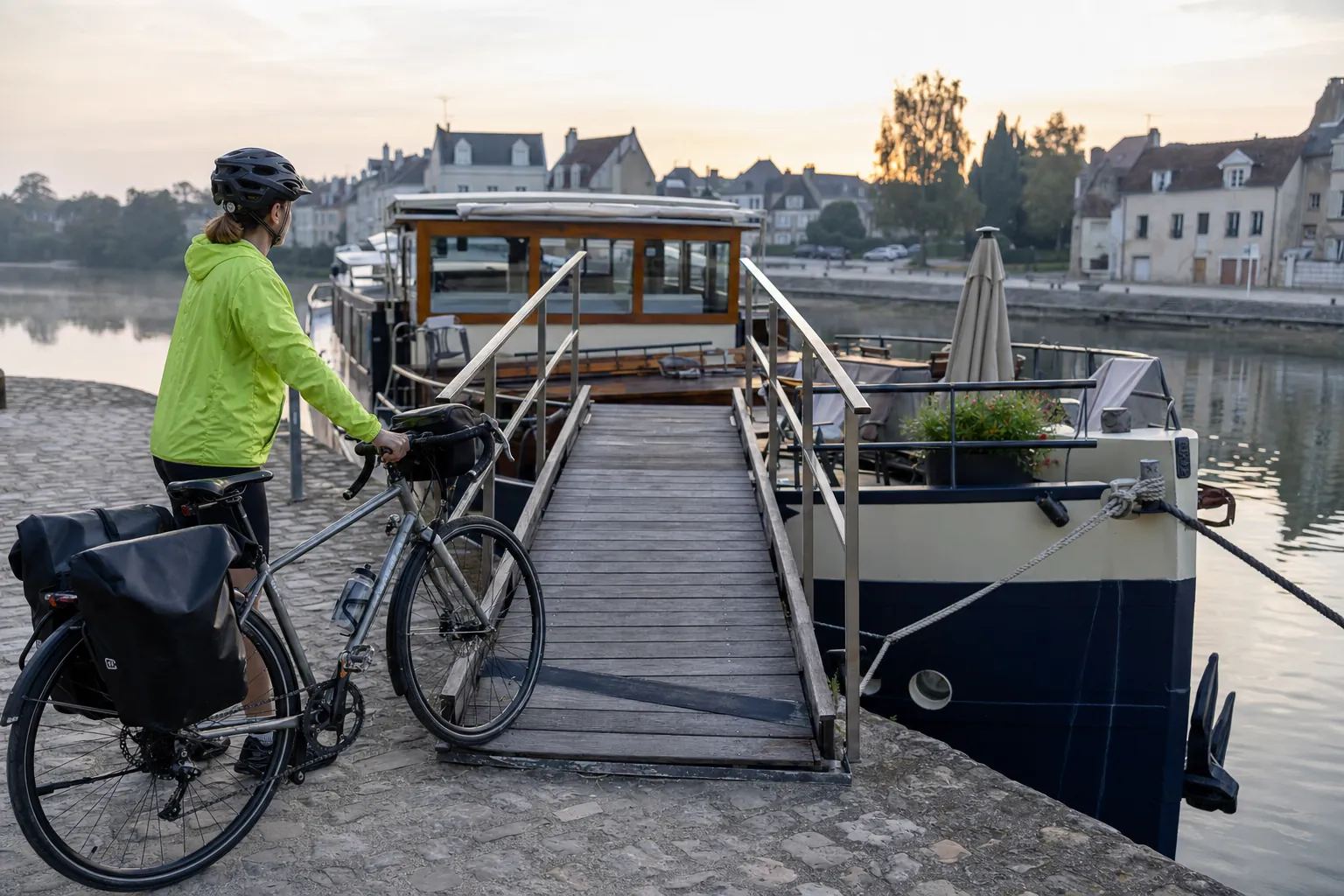
A bike and barge tour is one of the easiest ways to make an active European trip feel unhurried. You ride through the countryside during the day, return to the same floating home in the evening, and do not have to drag a suitcase from hotel to hotel. That simple rhythm is the draw. It also means the best trip is less about finding the most beautiful brochure and more about matching the route, boat, and riding style to the people going.
The phrase covers a wide range of experiences. One itinerary may be a relaxed canal route in the Netherlands with short, flat days. Another may follow a river through wine country, take in more elevation, and use a larger ship. Croatia is often called bike and boat travel rather than bike and barge travel because the trip moves between islands on the Adriatic. They share the same core idea, but the feel on the ground is different.
This guide gives you the questions worth answering before you commit. Start with the reality of the daily ride, then look closely at the boat, the support style, and the people in your party. Once those fit, a bike and barge trip can be remarkably simple: breakfast, ride, explore, come back to your cabin, and wake up somewhere new.
What a bike and barge tour actually is
On a classic inland-waterway trip, the boat is your accommodation for the week and your luggage moves with it. You cycle between planned stops while the vessel travels to the next mooring. Some days you may board early and ride later; on others, you ride most of the day and meet the boat in the afternoon. The pattern changes by route, locks, weather, and local navigation rules, so a flexible attitude helps.
The appeal is not luxury in the ocean-cruise sense. It is convenience with character. A well-run trip gives you a small cabin, meals or meal guidance depending on the itinerary, a place to unwind, and a base close to the water. Operators describe the model plainly: cycle by day, sleep aboard, and let the floating hotel take your bags to the next stop. That basic setup is a useful starting point, but the details still vary from boat to boat.
For travelers who dislike packing every morning, it is a real advantage. For travelers who want huge suites, unlimited choice, and a ship full of entertainment, it may be the wrong kind of cruise. The best expectation is a friendly, compact vessel where the day’s riding is the main event and the deck, lounge, and dining table are where the day settles down.
Start with the riding, not the destination photo
A destination can be beautiful and still be wrong for your group. Before you fall for the scenery, read the itinerary as if you were already on the saddle. Look at the distance for every day, the total elevation, the surface description, the expected pace, and the backup plan for weather. A route that is “mostly flat” can still have a long, exposed day or a few sharp climbs that matter to a first-time rider.
Daily distances on popular bike-and-barge itineraries commonly sit in a moderate range, but there is no standard mileage. One large operator notes daily stages of roughly 18 to 37 miles on its trips, with the exact distance shown on the itinerary. That is why the day-by-day route notes matter more than a general fitness label. A 25-mile day on smooth Dutch paths and a 25-mile day on rolling Croatian islands do not ask the same thing of your legs.
Ask these questions before booking:
- What is the shortest and longest ride, not just the average?
- How much climbing is there on the hardest day?
- Are there shorter-route or transfer options?
- What surfaces will we ride: pavement, packed gravel, cobbles, or mixed terrain?
- Does the boat move during the ride, and what happens if we need to stop early?
European cycling infrastructure can be excellent, but it is not identical everywhere. The EuroVelo route planner explains that signed, developed sections are generally suitable for most cyclists, while short stretches of poorer surface or missing signs can still occur. That is a good reminder that a self-guided route needs both a navigation plan and a little patience.
If you are drawn to boat and bike tours because you want a low-pressure vacation, choose the easy route on paper. You can always ride farther when you feel fresh. It is much harder to make a too-demanding itinerary feel relaxed once everyone is tired on day three.
An e-bike is a comfort choice, not a defeat
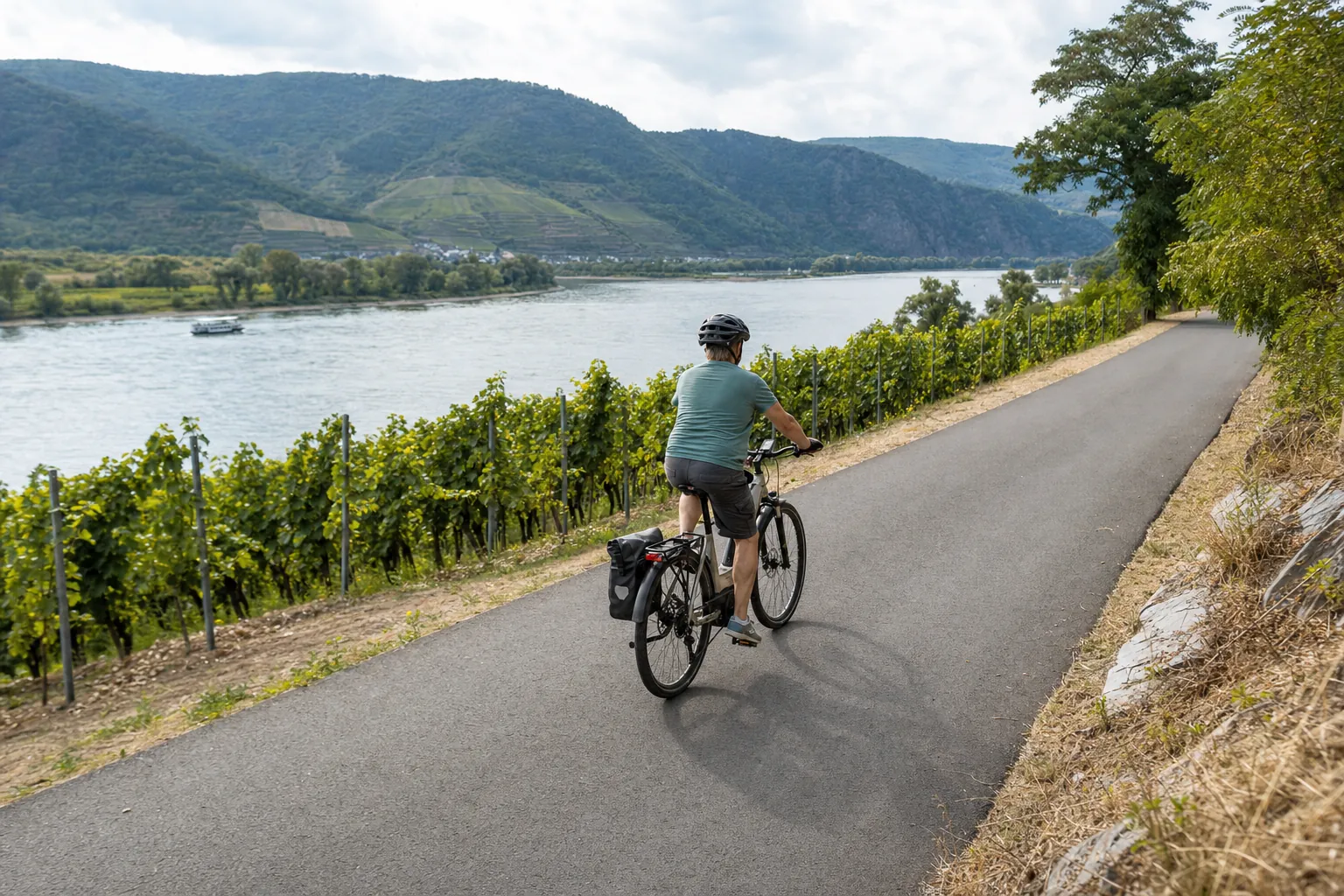
Mixed abilities are normal. One traveler may ride every weekend while another enjoys a bike only on vacation. An e-bike lets both people stay in the same conversation, reach the same café, and enjoy the same view without turning the day into a test. It is especially useful on routes with wind, bridges, steady grades, or warm afternoons.
Still, an e-bike is not a blanket answer. They are heavier to maneuver, availability can be limited, and the battery plan matters on longer days. Ask whether charging is handled on board, whether a spare battery is available, and whether the itinerary limits e-bike use on particular terrain. Also ask for a realistic description of the bike’s frame and fit. Comfort comes from a properly adjusted saddle and bars as much as it does from the motor.
The question is not “Can I manage without one?” It is “How do I want to feel after lunch?” For a couple or group with different cycling confidence, paying for e-bike support can protect the trip from becoming a daily negotiation. Bob can help sort that out before you choose an itinerary; the right bike choice is often visible once he knows your riding history and the route you have in mind.
Choose guided or self-guided based on your real travel style
Guided trips work well for travelers who want the route handled. A guide manages direction, local timing, stops, and group flow. That can be especially valuable on a first bike and barge tour, in a destination where you do not speak the language, or when one person in the party does not want to be responsible for navigation.
Self-guided trips give you more control over your day. You usually receive route notes, maps, or an app and ride at your own rhythm. That can be wonderful for travelers who like an unplanned coffee stop or want more time in a village museum. The tradeoff is practical independence: if you take a wrong turn, have a flat, or miss a turn because you were looking at a view, you need to stay calm and get yourself back on track.
Neither style is better. The wrong choice is pretending you want freedom when what you really want is someone else to handle the details. If you are comparing both, ask about mechanical help, guide availability by phone, planned regrouping points, and whether routes are marked or app-led. On Croatia island-hopping trips, where weather and sailing conditions shape the day, choosing a guided format can feel especially reassuring. The Croatia island-hopping page is a good place to start that conversation.
The boat matters as much as the route
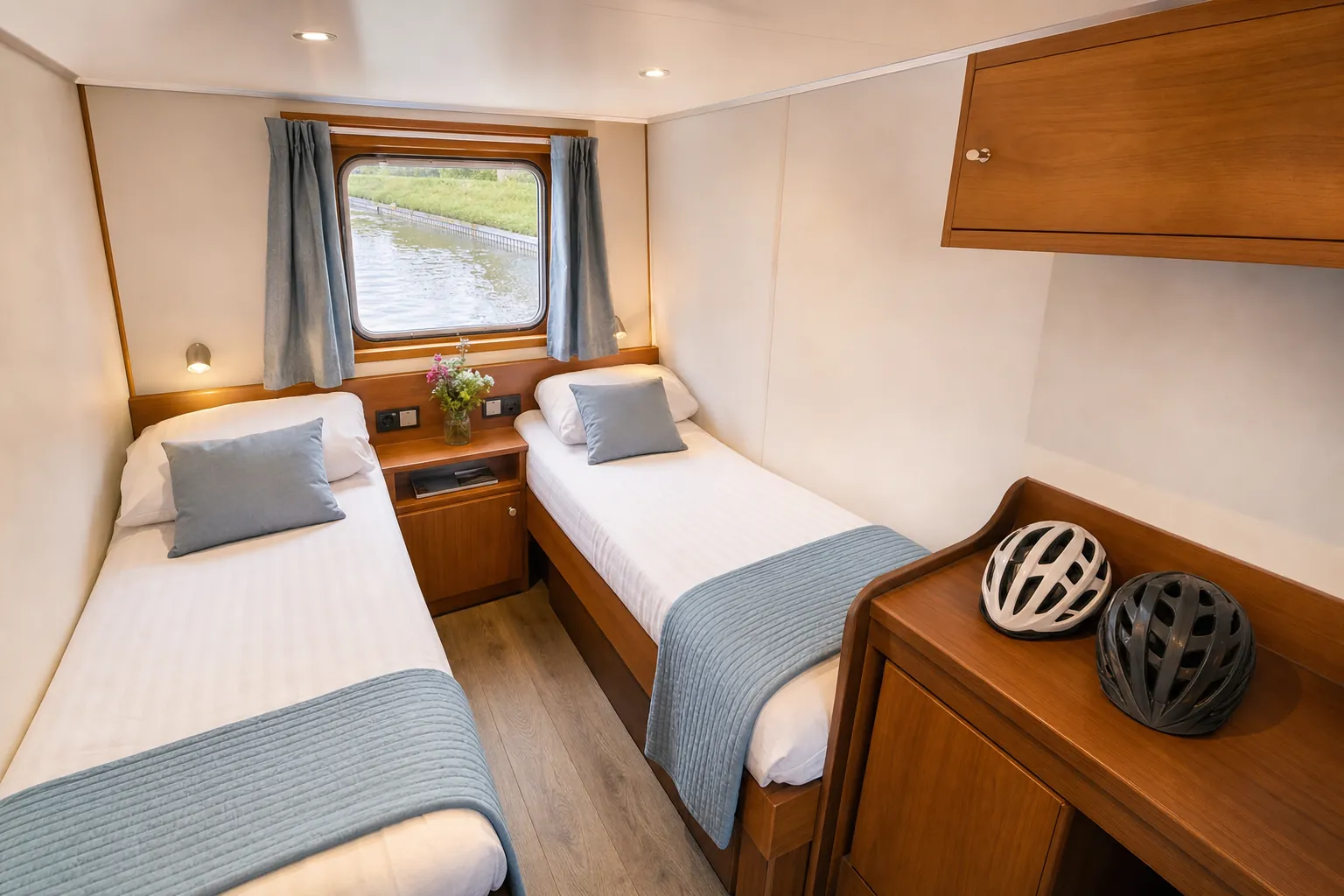
Travelers often spend hours comparing destinations and five minutes comparing cabins. Reverse that. You will sleep, shower, dress, and reset on the boat every day. A compact cabin can be perfectly pleasant if you expect it. It can feel frustrating if you assumed a standard hotel room with generous storage.
Look for cabin size, bed arrangement, window type, air conditioning, private bathroom, and storage. Ask where the cabin sits relative to stairs, the lounge, the galley, and the engine. A lower-deck cabin may be quieter or cooler; an upper-deck cabin may have a different view and more natural light. None of those details is universally best. They are personal preferences that should be decided before the deposit.
Capacity affects the social feel, too. Barges can range from very small groups to around 40 passengers, depending on the vessel. One operator’s overview notes typical small-ship amenities and limited cabin storage, which is a useful reality check. Pack one manageable suitcase, use soft layers, and leave the “just in case” wardrobe at home.
Think about the social rhythm before you choose the boat
A bike and barge trip is naturally social. You are likely to see the same travelers at breakfast, during a coffee stop, on the deck, and at dinner. For some people, that is the best part of the week. A small group can make an unfamiliar country feel easy on the first night, and conversations develop without needing a formal schedule.
For others, that rhythm takes a little adjustment. You may have less private space than in a resort hotel, and dinner can be a group occasion rather than a table for two. That is not a flaw. It is simply part of the product. Read the boat’s guest capacity, ask whether some dinners are ashore, and consider whether you want a smaller vessel, a larger ship, or a private departure.
Couples often enjoy having a mix of independent riding time and easy company in the evening. Solo travelers may find the group format reassuring because the logistics are shared. Friends and families should be honest about their pace. If one person expects early starts and long rides while another expects a leisurely morning and a long lunch, set expectations before you arrive. The boat cannot fix a mismatch in travel style, but a clear conversation can.
Group size affects the daily flow as well. A larger group can mean more energy at dinner and a broader mix of people. A small boat can feel more personal but may have fewer cabin choices and less separation between active and quiet spaces. Look past the word “intimate” in the description and ask what that means in numbers. A traveler who loves meeting new people may see 24 guests as a sweet spot; another may prefer a charter with only their own friends.
Pick a destination for the pace you want
Holland is often a strong first choice because the terrain is generally gentle, the cycling culture is mature, and canals fit the travel style naturally. It suits travelers who picture easy riding, windmills, small towns, and long evenings outdoors. Spring tulip departures are popular, but the most famous dates are not automatically the best fit for every traveler. Ask about crowds, weather, and cabin availability before deciding.
The Danube and other river routes appeal to travelers who want a longer sweep of scenery and a mix of villages, vineyards, and historic cities. These can range from easy-going to more structured, depending on the boat and route. France can feel slower and more food-focused, while the Moselle and Rhine bring river-valley landscapes and wine-country stops. Each sounds appealing because each is. The deciding question is what you want the days to feel like.
Croatia is a different rhythm. The boat moves across the Adriatic between islands, and the riding can be hillier and hotter than an inland canal trip. The reward is clear water, old ports, and a stronger sea-going atmosphere. For travelers looking at private departures or a more tailored group experience, private group charters may open up options that a scheduled sailing cannot.
Do not force a destination because it has the most recognizable name. A good advisor should be able to tell you, in plain terms, whether the route is the “easy week with friends,” the “we want a little challenge,” or the “we want scenery, food, and a comfortable boat first” choice.
Plan for the parts that are easy to overlook
The success of a bike and barge trip is usually decided before boarding. Flights, transfer timing, luggage limits, bike fit, dietary needs, and travel insurance are not glamorous, but they are the difference between an easy arrival and a strained first day. Aim to arrive early enough that a delayed flight does not put the whole trip at risk, especially when the embarkation city is not your final destination.
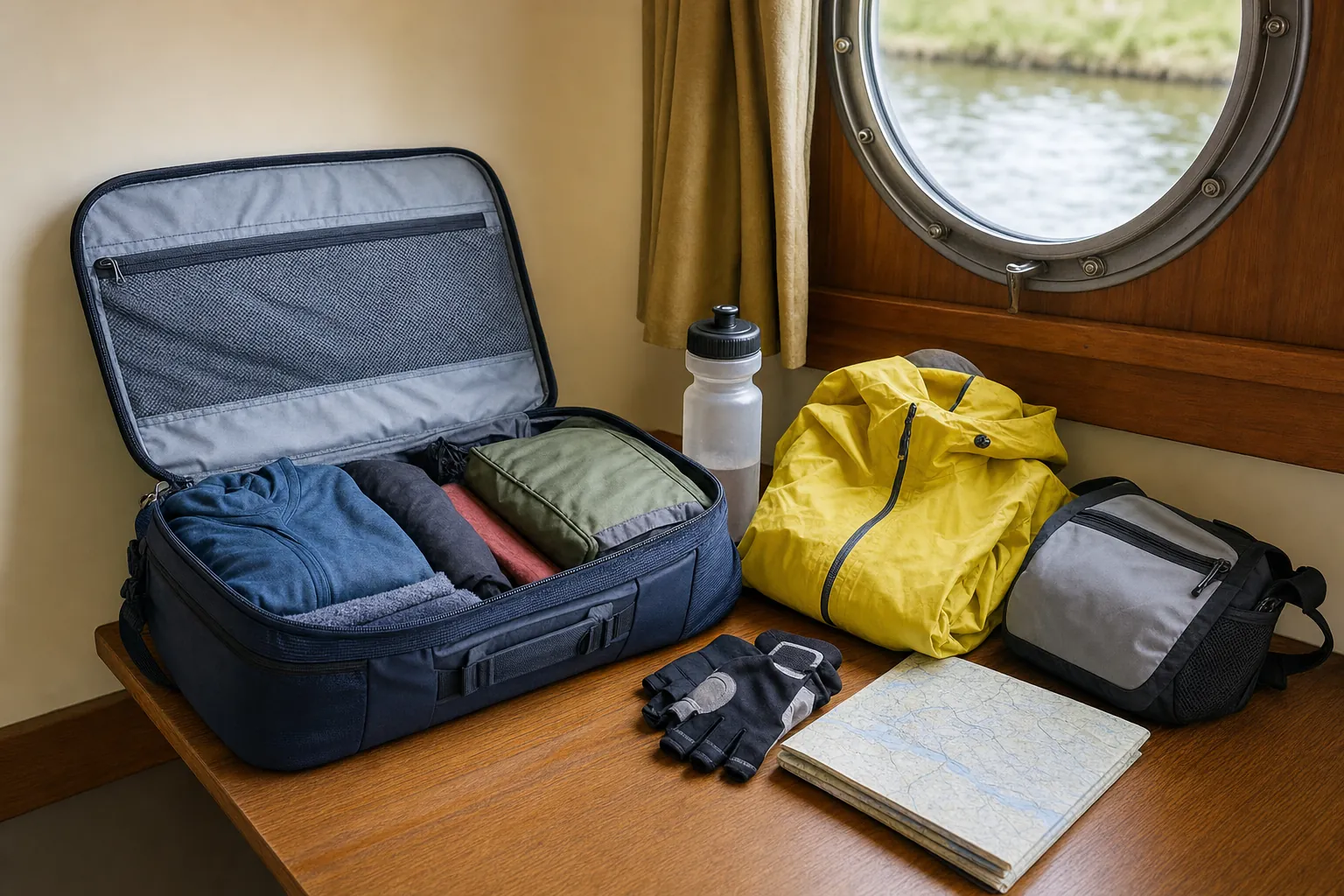
For packing, think layers and function. A lightweight rain shell, comfortable off-bike shoes, sun protection, gloves, a small day bag, and clothes that work at dinner without taking up half a suitcase will do more for you than specialized gear you have never used. You will usually spend the day in cycling clothes and the evening in something simple. Bring the items you would hate to lose in your carry-on.
Travel coverage deserves the same careful reading. The U.S. State Department advises travelers to review medical and evacuation coverage, not simply assume a domestic health plan follows them abroad. That does not mean every policy is the same. Read what it covers, what it excludes, and how assistance works before you travel. The site’s travel insurance page can help you begin that comparison.
When a bike and barge tour may not be the best match
It is worth saying plainly: this style of travel is not for every vacation. If your ideal trip means spacious rooms, a large choice of restaurants, late-night entertainment, and no fixed dining or boarding rhythm, a larger river or ocean cruise may be a better match. If you want to cover large distances on the bike every day, a point-to-point cycling tour with hotels may give you more time in the saddle.
Likewise, travelers with very limited mobility should not assume that a boat is automatically easy. Gangways can be steep, steps can be narrow, and historic towns may have uneven streets. The right question is not whether a trip is marketed as relaxed. It is whether the specific boat and route can support the way you move through a day. Ask about boarding, cabin access, bike mounting, and the terrain around the overnight stops.
Weather is another honest consideration. Rain can happen in Holland, wind can matter on open water, and summer heat can change the feel of a route in southern Europe. Good operators adjust when conditions are unsafe, but a change in plan is still a change in plan. Travelers who can enjoy a museum, a deck chair, or an extra coffee when the day shifts tend to love this format. Travelers who need every hour to follow a precise plan may find it frustrating.
None of that is a reason to avoid the trip. It is a reason to choose it for the right reasons: a comfortable base, an active day, a small-group atmosphere, and a willingness to let the waterway set part of the pace. When those are the things you want, a bike and barge tour can feel far more personal than a standard cruise and far less demanding than a luggage-hauling cycling holiday, without losing the sense of discovery.
A short checklist before you book
Bring these questions to the call or email. They turn a vague “Does this look good?” into a decision you can trust.
- Which day is physically the hardest, and why?
- What happens if I want to ride less or stay on the boat?
- What exact bike is included, and is an e-bike available in my size?
- What is included in meals, drinks, transfers, and port charges?
- What is the cabin size and bed setup?
- What guidance or support is available while riding?
- How does the itinerary change in rain, wind, or unsafe water conditions?
- What do I need to arrange before and after embarkation?
If an answer is vague, do not treat it as a yes. Get the itinerary, boat name, and inclusion list in writing. A trip does not need to be perfect to be right for you. It needs to be honest about what the week asks of you and what it gives back.
How Bob helps you choose the right trip
Bob has cycled across America and Europe and has spent two decades helping travelers turn a wish list into a plan. That is useful when you have narrowed it down to three trips that all look good online. He can help you compare the practical differences: the actual riding, the boat style, cabin choices, e-bike availability, transfers, and whether an itinerary fits the people traveling with you.
Start with the broad choices on the boat and bike tours page, or go straight to a conversation with Bob when you are ready to talk through dates, destinations, and the pace that feels right.
Frequently asked questions
Do I need to be an experienced cyclist for a bike and barge tour?
Usually, no. Many itineraries are designed for recreational riders, but “easy” is not a universal label. Read the daily mileage, elevation, surface notes, and any stated pace before deciding. An e-bike can make a mixed-ability trip much more comfortable, but it does not replace choosing a route that suits you.
Can I skip a day of cycling?
Often, yes, but it depends on the itinerary and the boat’s sailing plan. On many trips, staying aboard is a welcome option when you want a quieter day. Ask exactly what that looks like on the departure you are considering, especially on routes with a long transfer or a fixed docking schedule.
Are cabins on a barge like hotel rooms?
Think compact and comfortable rather than spacious. Cabin layouts, storage, bed configuration, shower size, air conditioning, and window placement vary by vessel. The best choice is the boat whose practical details match how you prefer to travel, not simply the boat with the prettiest deck photo.
Should I choose a guided or self-guided bike and barge tour?
Choose guided if you want route leadership, local context, and help managing the group’s pace. Choose self-guided if you are comfortable following navigation and prefer a more independent riding day. The right decision often comes down to how confident you feel handling a detour, a flat tire, or a change in weather without a guide beside you.