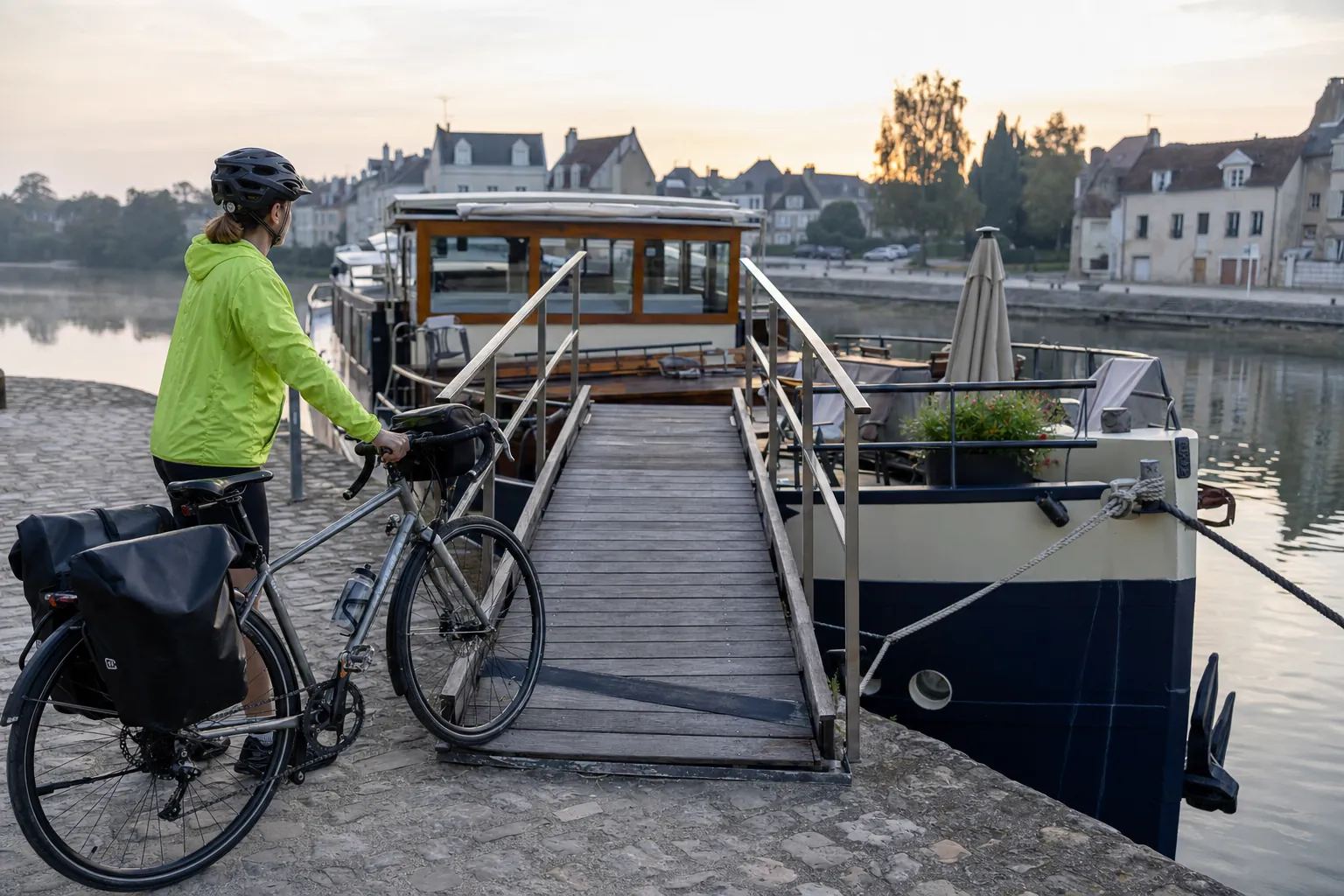
Decision guide
Best Bike and Barge Tour Companies: How to Compare Your Options
A practical way to compare bike and barge tour companies, from route support and cabins to bikes, inclusions, and booking details.
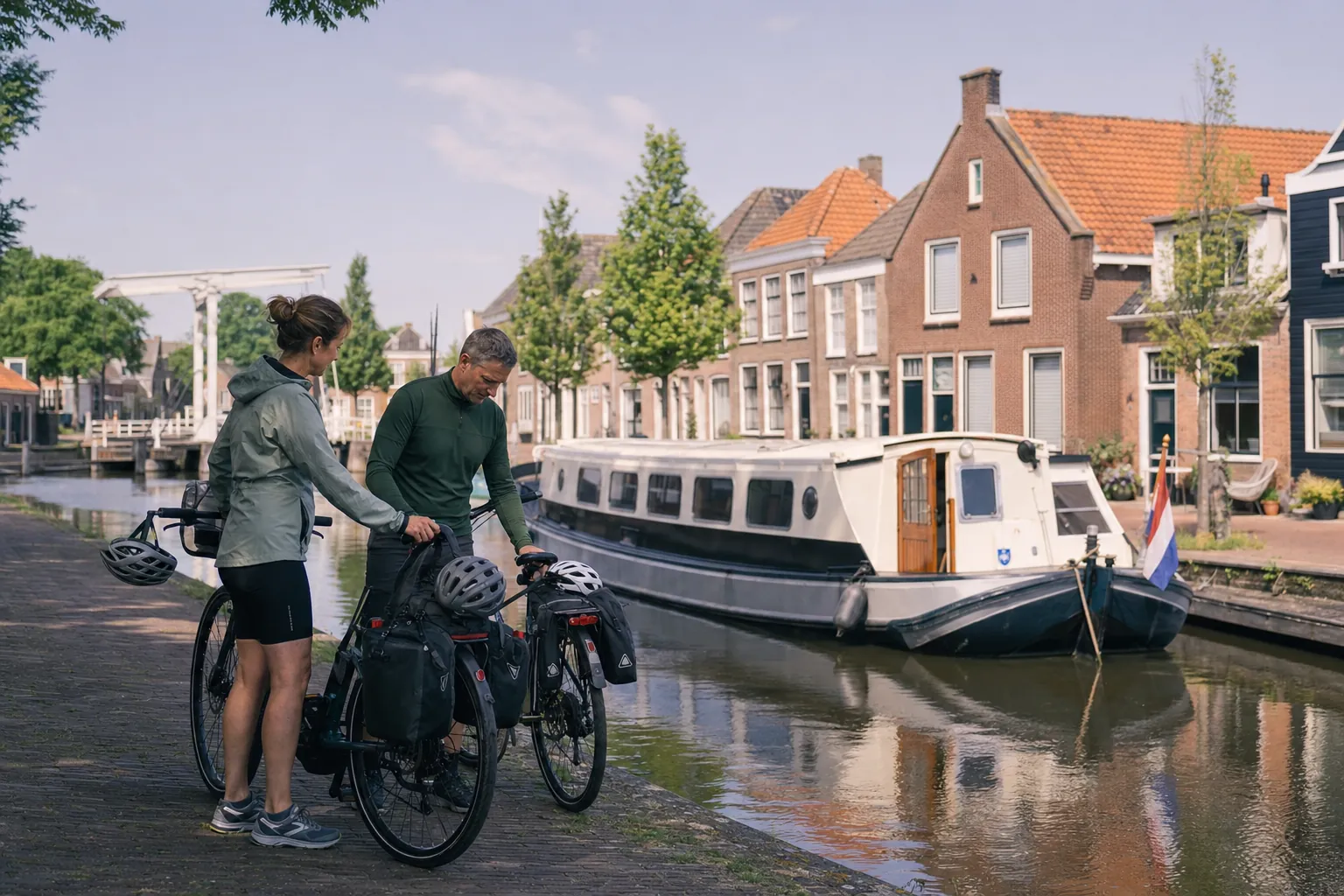
There is no single best bike and barge tour company for everyone. The right one is the company running a route, boat, and support style that fit the people going. A couple looking for a quiet cabin and easy Dutch paths may need something completely different from a group of friends hoping for island rides in Croatia, or experienced cyclists who want a self-guided week with plenty of freedom.
That is why comparing companies by glossy photos, a starting price, or a single review rarely gets you far enough. Those things can be useful, but they do not tell you how the hardest ride feels, whether your cabin is above or below the waterline, how quickly help arrives if a bike has a problem, or what happens when wind, rain, or a late flight changes the plan.
A better approach is to compare the trip in the order you will experience it: the route, the daily riding, the boat, the bikes, the support, and the details around arrival and departure. Once those are clear, the company choice becomes less mysterious. You are no longer trying to identify a universal winner. You are choosing the week you actually want to have.
Start with the trip, not the company name
Most travelers begin with a destination. Holland, the Danube, the Moselle, France, Croatia, and Greece all sound appealing because they are. But the company you choose should come after you understand the kind of trip you want. Start by writing down your non-negotiables: how active you want to be, whether anyone wants an e-bike, how much cabin comfort matters, whether you prefer a guide, and how much private time you need after a day with a group.
Then read the day-by-day itinerary rather than the broad trip description. Look for the longest cycling day, the amount of climbing, route surfaces, the time of year, and how the boat moves while you are riding. A relaxed week is not defined by the average mileage. It is defined by whether the one hardest day still feels reasonable for the least confident rider in your party.
The Netherlands is often a natural first choice because it can combine gentle terrain, mature cycling infrastructure, canals, and easy access to cities. The site's Netherlands bike and barge tours guide explains the practical differences between city-focused routes, quieter countryside, spring flower departures, guided travel, and self-guided travel. That kind of comparison should happen before you decide which company has the prettiest website.
For Croatia, take the word "bike and boat" literally. The boats move between islands, the terrain can be hillier, and weather has more influence on the rhythm of the week. A traveler who wants sea views and a more active ride may love it. A traveler who is expecting flat canal paths may be happier in Holland or on a gentle river route. Good companies make those distinctions easy to see before you book.
Compare the daily riding as if you were already on the saddle
Company descriptions often use words like easy, moderate, active, and relaxed. Treat those as invitations to look closer, not as a final answer. Each operator has its own scale, and an easy route in one country can feel different from an easy route somewhere else. The daily route notes are where the useful truth lives.
Ask for the shortest and longest rides, total climbing, surface notes, expected pace, and alternatives for people who need less time in the saddle. You also want to know whether the boat is reachable during the day. On some trips, staying aboard is simple. On others, the boat follows a schedule that makes a shorter ride harder to arrange. Neither is wrong, but the difference matters when one traveler has a sore knee or simply wants a slower morning.
As one point of reference, Boat Bike Tours says its rides commonly run about 18 to 37 miles per day, with route difficulty and bike choice affecting the effort. That is not a rule for every operator or itinerary. It is a useful reminder that a company should show the details rather than hide them behind a general fitness label.
Pay special attention to wind, heat, and hills. Dutch wind can turn a flat day into real work. Croatian island roads can be short but steep. River valleys can feel gentle until the route leaves the water for a vineyard road or historic hill town. Ask the company to describe the hard day in plain language. A clear answer is a positive sign. A vague answer is a reason to keep comparing.
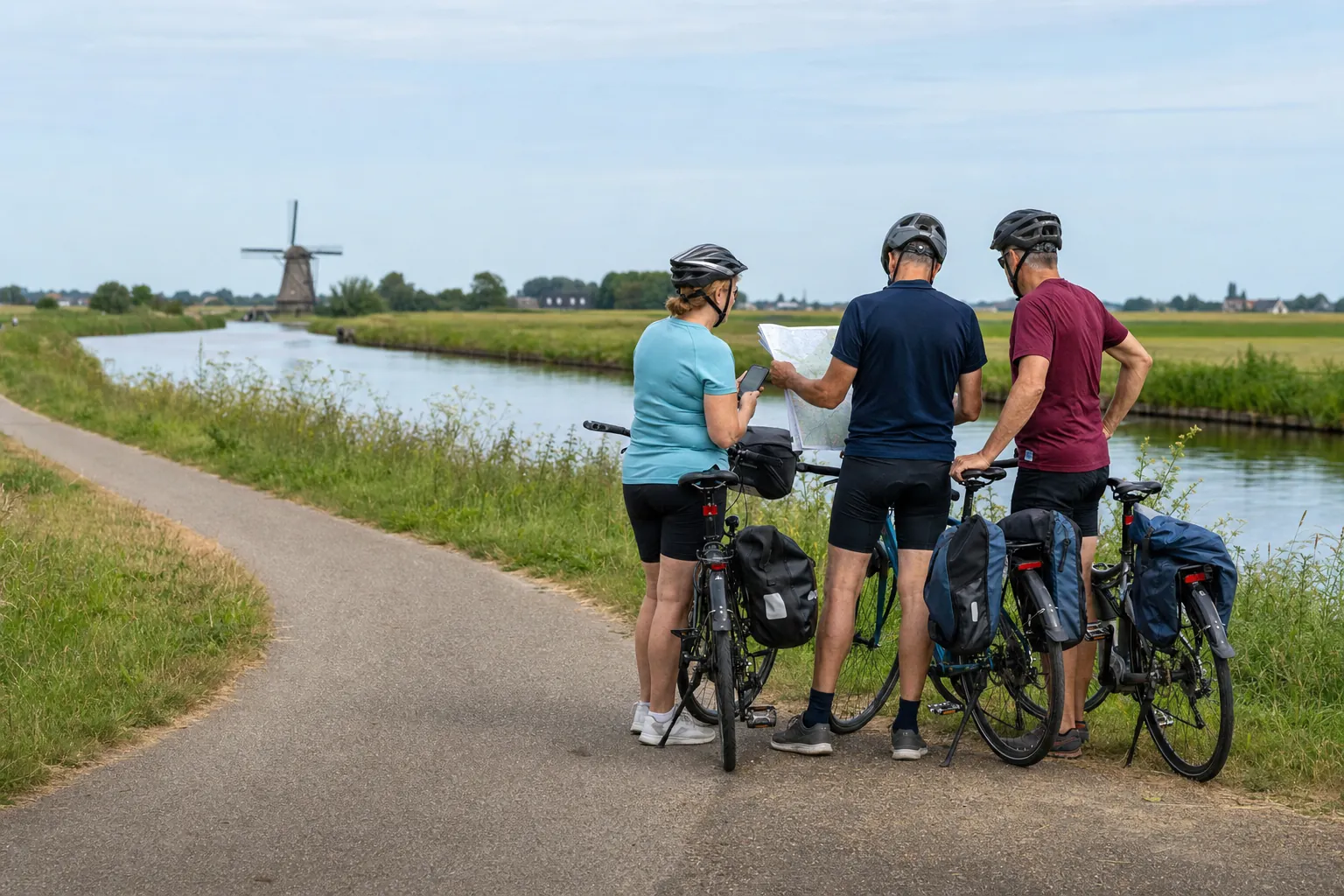
Guided, self-guided, and semi-guided are not interchangeable
These labels describe the way your day is supported, not just the amount of freedom you have. A fully guided trip usually means a tour leader is present during the ride, manages the group rhythm, and adds local context. It is a strong choice for first-time bike-and-barge travelers, people who do not want to navigate, solo travelers who want an easy social entry point, or groups with mixed cycling confidence.
Self-guided travel usually gives you route notes, maps, or an app and lets you ride independently. It can be wonderfully flexible. You can stop for a long lunch, spend extra time in a small town, or ride a little faster without feeling tied to a group. The tradeoff is that you need to be comfortable using navigation and solving small problems calmly. Ask how you contact support, whether there are planned regrouping points, and how a mechanical issue is handled.
Semi-guided trips sit somewhere in the middle. They may provide a guide for part of the day, a support vehicle, structured route briefings, or a mix of group riding and independent time. The label itself does not tell you enough. Ask what happens at a missed turn, whether a guide is riding with the group, how much language support is available, and whether you are expected to reach the boat at a fixed time.
The right question is not "Which style is best?" It is "Who do I want to be responsible for when the plan changes?" If the answer is "not me," a guided departure is usually worth a serious look. If you enjoy figuring out the day as you go, self-guided travel may be the better value.
The boat is part of the company comparison
On a bike and barge trip, the boat is not just transportation. It is where you sleep, shower, eat breakfast, meet other travelers, and recover after the ride. That means you should compare the actual vessel, not only the operator's general reputation. One company can run trips on several boats with very different cabin layouts, guest counts, decks, dining arrangements, and levels of comfort.
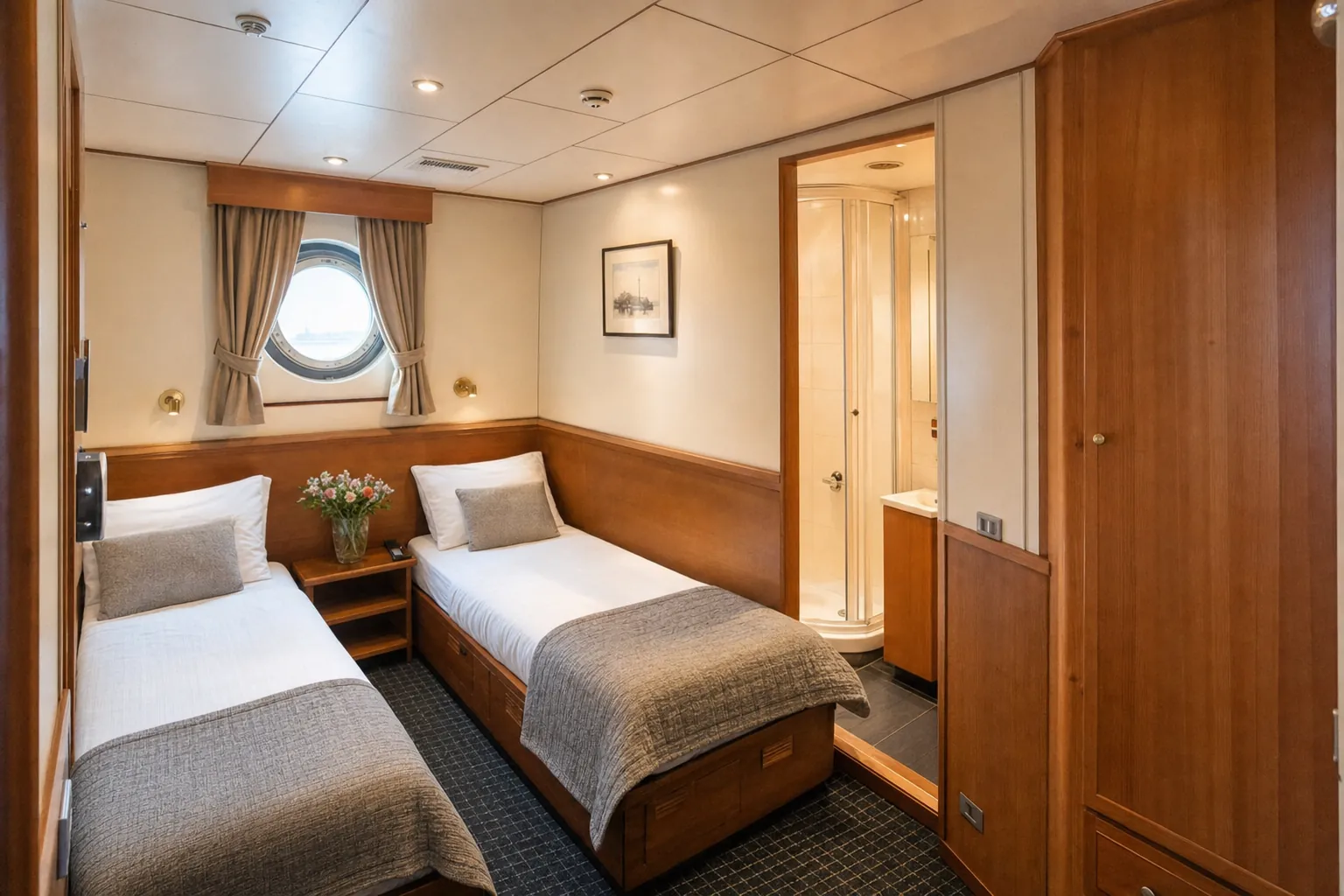
Start with the cabin itself. Look for its dimensions, bed arrangement, window type, bathroom layout, storage, air conditioning, and whether it is on the upper or lower deck. A compact lower-deck cabin may be a perfectly good choice when you want a lower price and do not mind portholes. It may be frustrating if natural light, larger windows, or easy access to the deck matter to you. Ask about stairs and gangways, too. A boat can be intimate and comfortable without being a good match for every mobility need.
Guest count changes the whole social feel. A barge with a dozen guests can feel personal and quiet. A larger vessel may have more cabin choices and more lounge space, but also a different rhythm at meals and on shore. Neither is better by default. Think about whether you want a close-knit group, more people to meet, or more room to disappear with a book after dinner.
Look at the dining arrangement and the boat's common spaces. Are meals all onboard? Are some dinners ashore? Is there a covered deck if the weather turns? Is the lounge a real place to spend time, or mainly a passage to the dining room? Strong companies answer these questions with ship-specific photos and details. They know that a beautiful route cannot compensate for a cabin that makes you unhappy by day three.
Ask exactly what bicycle you will ride
The phrase "bike included" is not enough information. The type of bike, frame style, gears, brakes, tire width, fit range, and luggage setup all affect how comfortable the week feels. On a flat Dutch tour, a simple upright touring bike may be ideal. On a hillier route, you may care more about gearing and e-bike battery planning. If you are tall, petite, have joint concerns, or use clipless pedals, bring that up before you book.
An e-bike is often the simplest way to protect a trip with different ability levels. It does not mean the rider is unfit. It can mean the couple arrives at the same cafe in a good mood, the group does not negotiate every climb, and everyone still has energy for dinner. The important details are availability, sizing, battery charging, upgrade cost, and whether e-bikes are limited on a particular route or departure.
Some companies allow travelers to bring a personal bike, while others have limited deck space or only allow it on certain ships. Boat Bike Tours, for example, publishes details about its rental-bike setup, including the style of bike used on many Netherlands routes. That sort of specificity is useful. It lets you compare real equipment rather than hoping a generic stock photo represents what will be waiting at the dock.
Do not forget the small things. Ask whether panniers, helmets, locks, repair kits, water-bottle holders, and phone mounts are included. Ask whether a flat tire is a self-service problem, a guide problem, or a phone-call problem. Ask what happens if the bike does not fit. These questions feel fussy before the trip and sensible once you are miles from the boat.
Compare what is included, and what is merely mentioned
Starting prices are a poor way to compare bike and barge companies because the packages are not identical. One price may include most meals, bikes, a guide, route materials, and transfers. Another may exclude drinks, port charges, e-bike upgrades, local taxes, airport transfers, several meals ashore, and gratuities. A lower number can still be the better value, but only after you compare the full list.
Make a simple side-by-side list before paying a deposit. You do not need a complicated spreadsheet. A page with the categories below will make the meaningful gaps obvious.
| Compare this | Questions worth asking |
|---|---|
| Accommodation | Which cabin category is included? Is there a surcharge for a better location, larger window, or double bed? |
| Meals and drinks | Which meals are onboard? Are drinks, coffee, special diets, and dinners ashore included or extra? |
| Cycling | Is the standard bike included? What does an e-bike cost? Are helmets, panniers, and repairs included? |
| Support | Who helps with navigation, mechanical issues, illness, or a day when someone rides less? |
| Getting there | Are airport transfers, hotel nights, and embarkation directions included, arranged, or entirely your responsibility? |
| Changes and cancellation | What happens if a departure changes, a cabin is unavailable, weather alters the route, or you need to cancel? |
Read the payment schedule and cancellation terms closely. If a booking is listed as "on request," it may mean cabin availability is still being checked with the direct operator. That is a normal part of some partner arrangements, but it is different from a confirmed cabin. Ask when the booking becomes final, what alternatives will be offered, and whether the fare changes if your first choice is not available.
Look for clear answers about the less glamorous parts
The best bike and barge tour companies do not make you work to understand boarding, luggage, transfers, travel insurance, and support if something goes wrong. These are not side details. They decide whether the first and last day of the trip feel easy or tense.
Ask where the boat moors on embarkation day, what time boarding begins, and whether you should arrive a night early. A missed connection can be much harder to recover from when the boat sails or moves to the next town. You also want to know if the company gives clear instructions for getting from the airport or train station to the exact docking point, not just the city name.
Luggage rules matter more than they seem. Cabin storage is limited, gangways can be narrow, and a heavy hard-shell suitcase is rarely a joy to move around a compact vessel. Ask what size and type of bag the company recommends, whether you can leave extra luggage before or after the trip, and whether there is a place for a personal bike case if you are bringing your own equipment.
Travel insurance deserves the same direct comparison. The U.S. State Department advises travelers to check medical and evacuation coverage before international travel. The site's travel insurance page is a good starting point for the questions to ask, but the policy itself is what counts. Read it before you need it, including the conditions around cancellation, medical care, and emergency transport.
Use a known operator as a benchmark, not a shortcut
Established companies can be useful benchmarks because their sites tend to show the kinds of trip details you should expect to find. Boat Bike Tours, for example, lists tours across multiple European countries and identifies guidance style and cycling difficulty on its itineraries. That makes it easier for a traveler to see that "bike and barge" is not one uniform product. A route can be fully guided, self-guided, or semi-guided. It can be a compact barge, a larger river vessel, or a sailing trip. It can be flat and easy-going or more ambitious.
That does not make any one company the right answer for every traveler. A major operator may have the breadth and departure dates you need. A smaller specialist may offer a boat or route that feels more personal. A partner-operated departure may be exactly right if its cabin, price, and logistics fit your group. The point is to compare the actual departure, not to assume that a recognizable name makes every boat and itinerary interchangeable.
When you have two or three options in front of you, ask each company the same questions. Which day is hardest? What exact bike will I ride? Where is my cabin? What is not included? What happens if I skip a day of cycling? How do I get from the airport to the boat? The company that gives you specific, consistent answers is much easier to trust than one that answers with broad promises.
Do not let a review score make the decision for you
Reviews are valuable when they help you notice a pattern, but they are rarely enough on their own. Read the recent comments that sound most like your own travel style. A retired couple who loved a lively dinner table may be describing the wrong atmosphere for travelers who want quiet evenings. An experienced cyclist who was delighted by a challenging route may be a poor match for a first-time rider looking for a gentle holiday.
Pay attention to the details behind both praise and criticism. If several people mention a small cabin, that may be useful information rather than a deal-breaker. If people praise a guide for adapting when rain moved in, that tells you something about the on-the-ground support. If a complaint is about a missed port or a rerouted sailing, look for the company's response and whether the itinerary explained that weather or water conditions can change a plan.
Be especially careful with reviews that only say "amazing" or "terrible" without naming the boat, route, timing, or reason. A bike and barge departure has many moving parts. One guest may be reviewing a ship, another may be reviewing a guide, and another may be frustrated by a travel delay before they ever boarded. The most useful reviews explain the context.
Use reviews after you have compared the route and inclusions, not before. They can validate a well-matched shortlist. They cannot tell you whether a cabin, e-bike, guidance style, or daily mileage fits your own group. The goal is not the highest score on the internet. It is the fewest unpleasant surprises once your week is underway.
A simple way to choose between your finalists
Once you have narrowed it to a few companies or departures, rank them on the things that affect your own experience. Give the most weight to route fit, cabin fit, support style, and the total cost after upgrades and extras. A lower price is not a win if you need to add an e-bike, a better cabin, transfers, several meals, and a hotel night to make the trip workable. A more expensive option is not automatically better if the route is too demanding or the boat is more social than you want.
For couples, the deciding factor is often the cabin and pace. For friends, it may be whether everyone can ride comfortably together. For a private departure, the key questions may be boat capacity, routing freedom, and how much planning support the organizer receives. For solo travelers, guided support and the social atmosphere can matter more than finding the lowest fare.
Put the final candidates in order, then read each itinerary once more as a traveler rather than a shopper. Imagine the boarding day. Imagine the longest ride. Imagine a rainy afternoon, a late lunch, and the hour before dinner. The option that still sounds comfortable and enjoyable when you picture the ordinary moments is usually the right one.
Bring the shortlist to Bob
Bob has spent two decades helping travelers compare active European trips and has ridden extensively in the United States and Europe. That perspective is useful when two departures look similar online but differ in the details that shape the week: riding pace, guide support, boat atmosphere, cabin location, e-bike availability, transfers, and the practical needs of the people going.
Start with the site's boat and bike tours overview, then bring Bob the names or links that caught your attention. He can help turn a stack of brochures into a clear choice, or you can talk with Bob before you begin comparing.
Frequently asked questions
What is the difference between a tour operator and a travel advisor?
A tour operator runs a particular boat, route, or departure. A travel advisor helps you compare options across operators and can focus on the fit for your group, dates, riding level, cabin needs, and travel plans. On some departures, one company may act as both. Ask who is responsible for the boat and who will be your point of contact if a detail changes.
Is a guided bike and barge tour better than a self-guided one?
Neither is automatically better. Guided travel suits people who want route leadership, local context, and a shared daily rhythm. Self-guided travel suits confident riders who want to set their own pace. Compare the actual support behind each style, including navigation, mechanical help, regrouping, and what happens if someone needs to ride less.
How far do you ride on a bike and barge tour?
It varies by route and day. A useful comparison starts with the longest day, the climbing, the surfaces, and whether a shorter option exists. Do not rely on an itinerary being called easy. Ask to see the day-by-day route notes before you decide.
Should I book an e-bike?
An e-bike can be a smart comfort choice for mixed-ability travelers, windy routes, hills, or anyone who wants more energy left for sightseeing. Confirm availability, frame style, fit, charging arrangements, and the upgrade cost before putting down a deposit.